
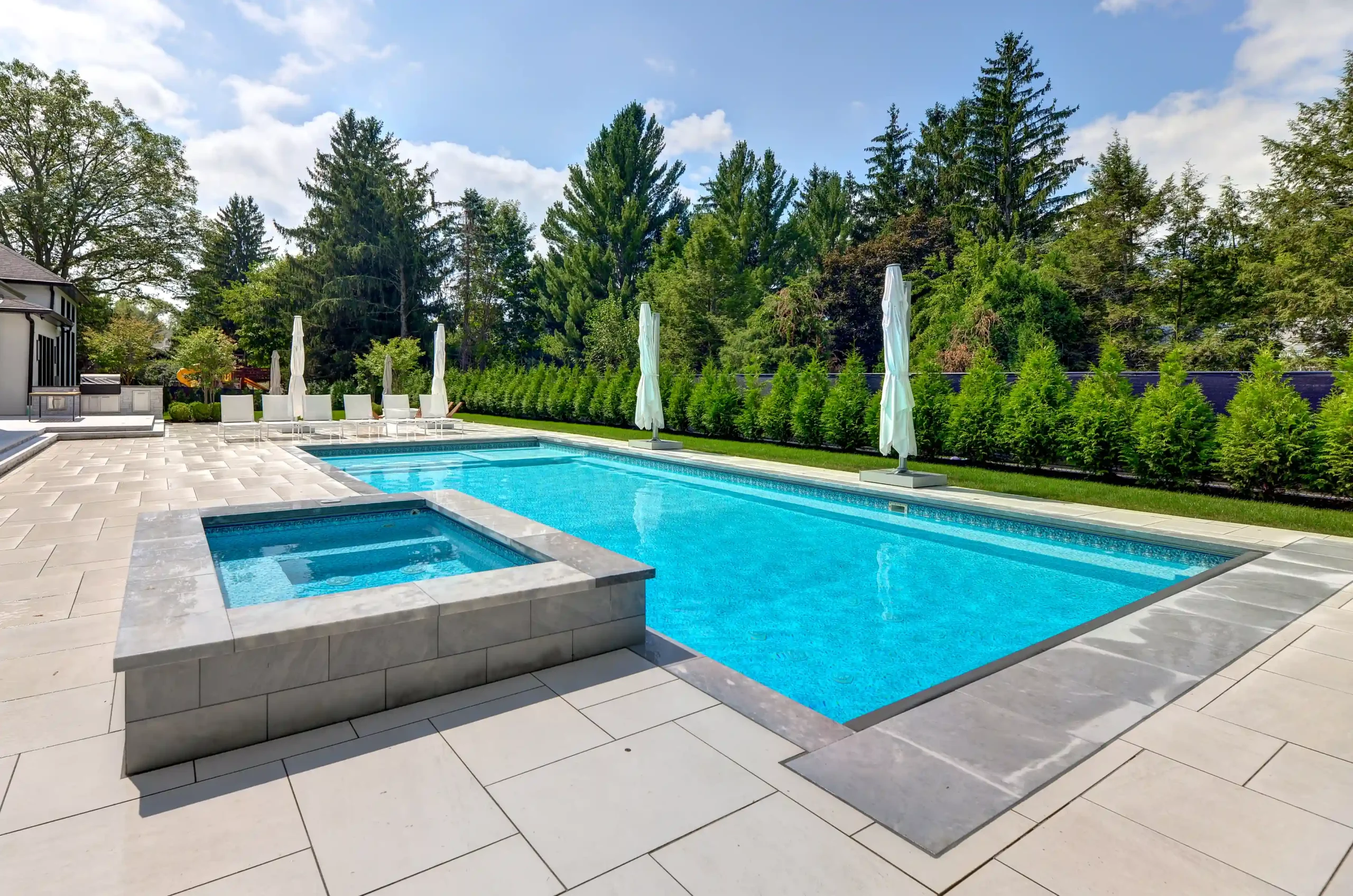
Water chemistry is one of those aspects of pool ownership that doesn’t announce itself when it’s right. A properly balanced pool simply looks good, feels comfortable, and runs without issue. It’s only when chemistry drifts out of range that the consequences become visible, and by then, some degree of damage has usually already occurred. For Hamptons pool owners, understanding why balance matters and how to maintain it reliably is foundational to protecting a significant investment.
The Full Picture of Balanced Water
Chlorine is the most discussed aspect of pool chemistry, but it represents only one element of a properly balanced pool. Several factors work in concert, and allowing any one of them to drift creates a chain reaction that affects the others.
pH sits at the center of that picture. Water with low pH is corrosive. It irritates the eyes and skin of swimmers, degrades interior surfaces, and works against the seals, fittings, and metal components of your equipment over time. High pH reduces the effectiveness of chlorine significantly, meaning sanitizer that has been added to the water is not performing its intended function. Water can test positive for chlorine and still not be adequately sanitized if the pH is too high.
Total alkalinity provides the stability that keeps pH from swinging dramatically in response to rainfall, bather load, or chemical additions. Calcium hardness determines whether water is chemically aggressive or prone to scaling. Low calcium causes water to draw minerals from pool surfaces, leading to etching and pitting. High calcium results in scale deposits that cloud water and restrict equipment performance.
Balanced water is water in which all of these factors are within their appropriate ranges simultaneously, not just one or two of them.
What Unbalanced Water Actually Costs
The consequences of unbalanced water extend well beyond aesthetics. Corrosive water damages pump seals, corrodes metal fittings, and shortens the life of heater components. Scale buildup restricts water flow through plumbing and reduces filter efficiency. Algae, once it establishes itself, requires aggressive chemical treatment to eliminate and can stain surfaces in ways that are difficult or impossible to fully reverse.
Each of these outcomes represents a cost, in repairs, in chemical remediation, or in surface damage, that consistent chemistry management would have prevented.
Hamptons Conditions Add Specific Challenges
Pools in the Hamptons face a set of conditions that make chemistry management more demanding than in some other environments. Salt air and humidity affect water balance in ways that inland pools don’t experience to the same degree. Heavy bather loads during peak summer weekends consume sanitizer rapidly. Significant rainfall events, which are not uncommon on the South Fork during summer, can dilute chemistry and shift pH substantially in a short period.
Properties that are not primary residences present an additional layer of complexity. A pool that is not being observed daily may drift out of balance for days before anyone notices, which is enough time for real damage to begin.
How Professional Service Addresses This
Consistent professional service removes the guesswork from water chemistry management. Rather than periodic testing and reactive adjustment, a regular service plan ensures that trained eyes are on your pool on a scheduled basis. Chemistry is managed proactively, problems are identified before they escalate, and your pool is in the right condition whenever you arrive.
Pelican Pools provides ongoing chemical management and maintenance services for pool owners throughout the Hamptons. Reach out to learn more about what a consistent service plan looks like for your property.