
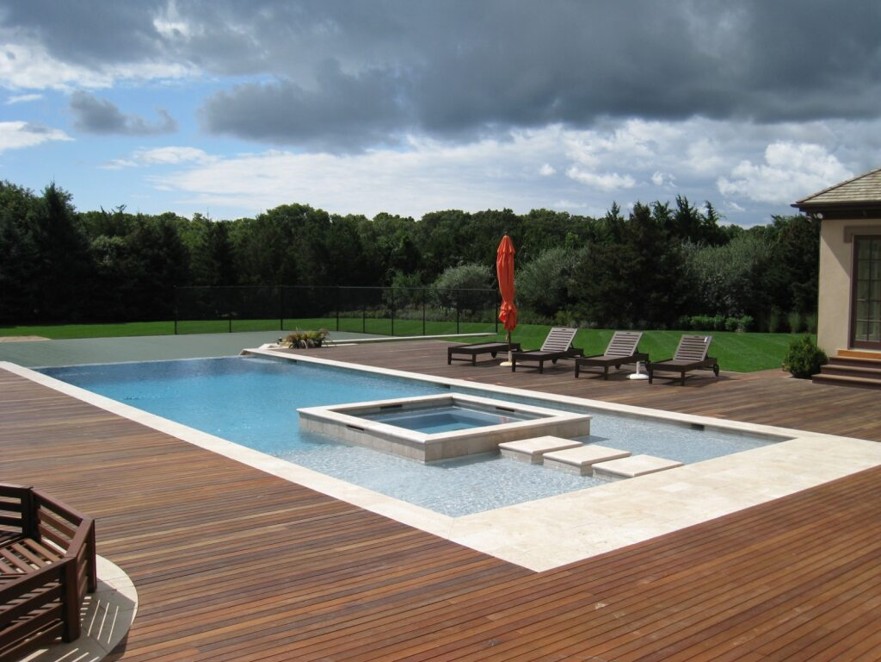
Weather on the East End has a character of its own. Storms arrive off the water with sustained wind and heavy rain, and a pool that is otherwise beautifully maintained can be affected in a matter of hours. A small amount of preparation protects both the pool and the equipment behind it. Below is the guidance the Pelican Pools team shares with our clients.
A Word on Automatic Covers
We begin here because it is the point that surprises people most. If your pool has an automatic cover, we advise leaving it open during significant rain and wind whenever possible. A closed cover collects rainwater, leaves and fallen branches, and that load places considerable stress on the fabric, tracks, ropes and pulleys. Clearing debris from an open pool is a simple matter by comparison, and far less costly than repairing or replacing cover components.
In Advance of the Storm
Review the water level. A pool filled to the coping or the top of the tile line has little capacity for heavy rainfall. Lowering the water by a few inches allows for the additional volume and limits the debris carried in by overflow. The pool should not be drained beyond that. The water provides the weight that keeps the structure stable against groundwater pressure, and an empty pool is vulnerable to damage.
Bring furnishings indoors. Chaises, umbrellas, cushions, planters and pool accessories should be stored or secured. In strong wind, these pieces can be carried into the pool, the equipment or the home itself.
See that the water is balanced. Rain and organic debris deplete sanitizer quickly. Water that is properly balanced beforehand is better able to stay clear and recovers more readily.
Confirm the location of your equipment breaker. Should water collect around the equipment, power will need to be turned off. It is helpful for you, your household staff or your property manager to know where the breaker is ahead of time.
While the Storm Passes
Leave the pool as it is. Cleaning, removing debris and attending to equipment are best postponed until the weather has cleared entirely. Lightning, wind and wet electrical equipment present a real hazard, and nothing in the pool requires attention in the moment.
Once Conditions Are Calm
Begin with the equipment. Look over the equipment pad before the system is turned on. If there is flooding or standing water, shut off power to the pool equipment and contact us when it is safe to do so. Likewise, if the system is running and sounds unusually loud, or something does not seem right, turn it off and allow one of our technicians to assess it.
Clear the surface and baskets. Leaves and small branches can be skimmed from the surface, and the skimmer and pump baskets emptied, before the system runs again. Larger debris is best left to our team.
Have the water tested. Rainfall and runoff alter pH, alkalinity and sanitizer levels. Once the pool is clear of debris, the water should be tested, rebalanced and, in most cases, shocked.
Arrange a post-storm visit. Our team is available for debris removal, water balancing, filter cleanings and a full review of the pool and equipment after the weather has passed.
At Your Service After the Storm
If you have any concerns once a storm has moved through, the Pelican Pools team is glad to help. We will see that your pool is restored to the condition you expect.